Open-Pit Mining
High production pressure, haulage support loads, dewatering needs, and demanding dust exposure.
Different operating regions create different risk profiles. Caterpillar organizes industry guidance around practical site conditions so equipment buyers can compare options through the lens of production continuity, service access, and environmental pressure.
The same generator or drilling decision can look different depending on altitude, heat, dust, grid access, fuel delivery, crew rotation, and regulatory expectations. These application groups help buyers start the conversation with the correct operating assumptions.
High production pressure, haulage support loads, dewatering needs, and demanding dust exposure.
Mobile drilling programs, remote crews, temporary power, and changing field conditions.
Daily equipment cycles, crushing support power, serviceable layouts, and predictable maintenance windows.
Standby generation, staged commissioning, and backup capacity for critical industrial facilities.
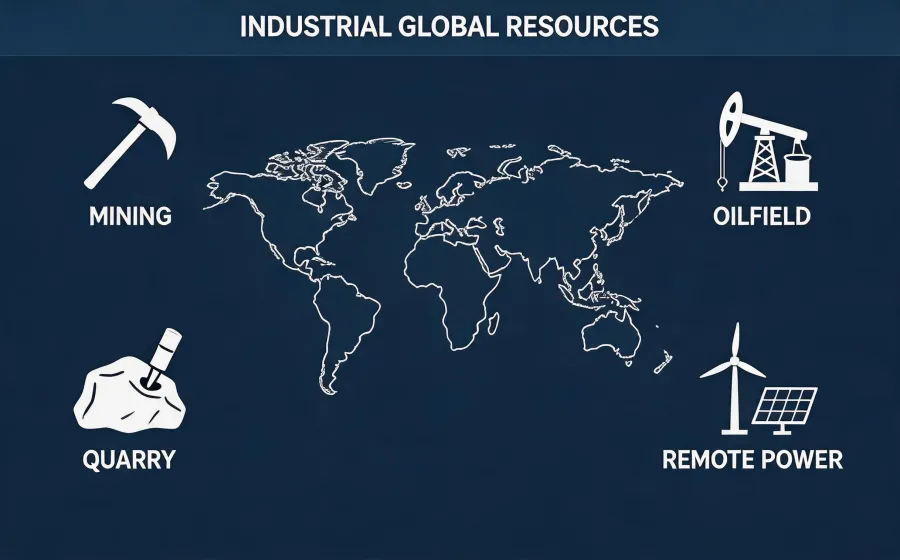
Caterpillar industry discussions translate regional realities into practical specification questions. A mine in a dusty high-altitude environment may need different cooling, filtration, service, and redundancy assumptions than a coastal quarry or temporary oilfield deployment.
This is why the site avoids treating industry pages as simple marketing categories. Each application is a prompt for structured discovery: what must remain online, who can service it, how quickly conditions change, and what failure would cost the operation.
Share the site type, climate, duty cycle, and support constraints so the response can focus on the risks most likely to influence equipment fit.
Tell us about site load, drilling duty, fuel availability, altitude, service access, and schedule pressure so the response can focus on practical operating fit.