
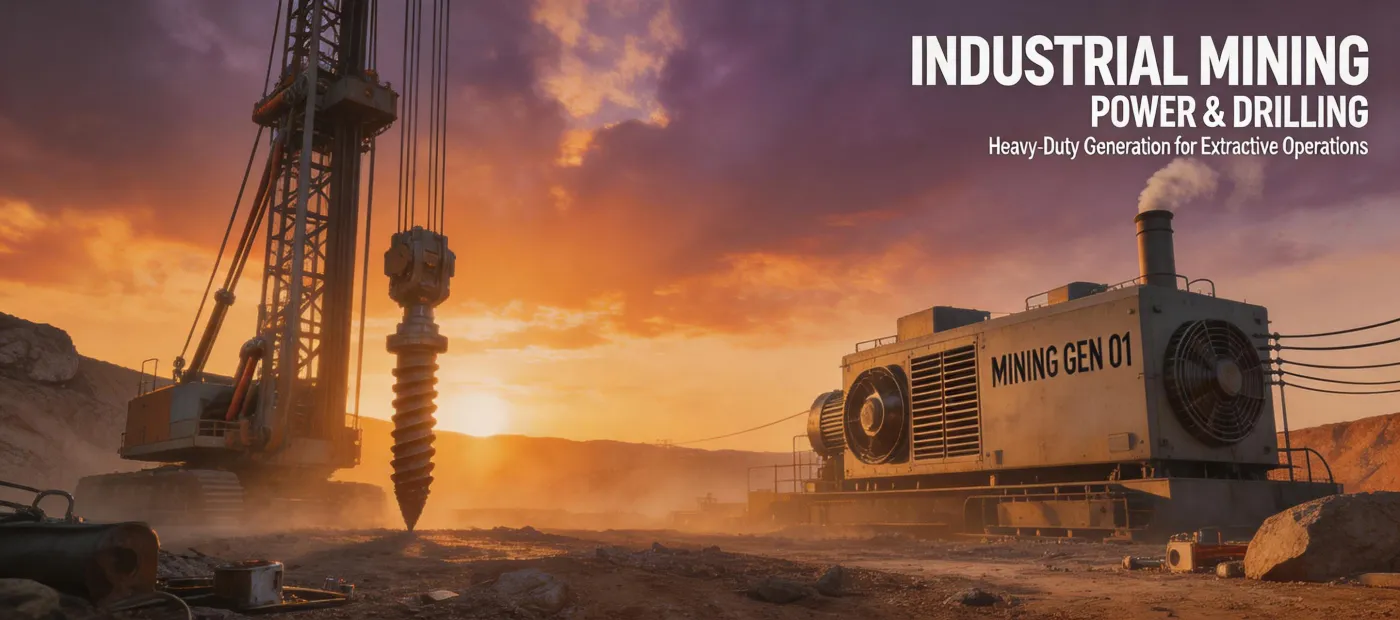
The Quote That Looked Like a Win
On March 14, 2022, I approved a $38,400 purchase order for a derrick package. It was the lowest of three bids. I remember thinking, "That's $6,400 under the next option—we're off to a good start."
I'm the procurement manager at a 180-person drilling services company. We run equipment for independent oil and gas operators across the Permian Basin—mostly mid-size exploration sites that can't afford long downtime. I've managed our equipment budget (roughly $2.4 million annually) for six years. In that time, I've negotiated with 40+ vendors and documented every order in our procurement system (yes, every single one, down to the bolts and packing slips).
But that March, I made the mistake I'd been warning my team about for years. I let the unit price do the talking.
Looking back, I can see exactly why. Our Q1 budget was tight. Corporate had asked every department to trim 8% from planned spend, and my director was breathing down my neck about the new site's equipment line. When Supplier B's quote came in $6,400 below the next option, I let that number do the persuading for me.
Three Bids, One Bad Decision
We needed a mid-size derrick package for a new exploration site in West Texas. The specs were straightforward: 140-foot mast, 500-ton capacity, standard API compliance. Nothing exotic.
Three suppliers came back within a week:
- Supplier A: $44,800 — included freight, installation support, and a 12-month parts warranty.
- Supplier B: $38,400 — "freight not included," installation "available at additional cost," 90-day parts warranty.
- Supplier C: $51,200 — premium package, on-site commissioning, 24-month warranty.
I laid them out on a spreadsheet and felt pretty good about Supplier B. It was $6,400 cheaper than A and $12,800 under C. The timeline looked fine—8-10 weeks, same as everyone else. I didn't build out a total-cost-of-ownership model. I didn't call their references. I looked at the number on the bottom of the quote and called it a day.
What I did do—and I'm not proud of this—was talk myself into it. I told myself freight would be "a few grand, max." I assumed "installation available at additional cost" meant a small line item. I figured a 90-day warranty was fine because "these things don't break." That's what budget pressure does: it turns assumptions into decisions.
Where the "Savings" Went
The derrick arrived in week 11—not week 8. Supplier B blamed "steel mill delays." (Which, honestly, might have been true. But they never flagged it until I called them in week 9, asking where the shipment was.) That three-week gap pushed back our site prep and cost us roughly $4,800 in standby crew fees. Crews don't come free, even when they're standing around waiting.
Then came the freight invoice. The quote said "freight not included." I assumed that meant $2,000, maybe $2,500. It came in at $4,150—oversized load permits, two pilot cars, and a route survey I hadn't budgeted for. (In my defense, I'd asked for a freight estimate. Their rep said "approximately $2-4k." I should have gotten it in writing.)
When I pushed back, here's what their account manager told me:
"The quote clearly states 'freight not included.' We're happy to provide a competitive rate."
"Competitive" turned out to be $4,150. Not competitive in my book, but technically accurate.
Installation was another surprise. Supplier B's "available at additional cost" turned into a $5,600 subcontractor bill because we didn't have the right hydraulic torque tools on-site. Supplier A would have included that support in their base price. I'd assumed "installation support" meant "someone tells you where to put it." Apparently, it means "someone actually helps install it." Lesson learned.
Then the real problem: two of the six anchor pins didn't match our existing foundation bolts. We could have waited four weeks for replacement parts—or paid a local machinist $1,900 to rework the pins. We paid the machinist. The project was already behind, and waiting another month would have pushed us into the next quarter's budget cycle.
Let me add it up:
- Unit price: $38,400
- Freight (unexpected): $4,150
- Standby crew fees (3 weeks): $4,800
- Installation subcontractor: $5,600
- Pin rework: $1,900
- Warranty gap on replacement parts (we bought two spares out of pocket): $1,350
Total: $56,200.
Supplier A's original quote—the "expensive" option—was $44,800 all-in. Even with a modest contingency, we would have been around $46,000. We paid roughly $10,000 more for the "cheap" derrick.
That's a 21% budget overrun on a single line item. Our CFO asked me to explain it in the quarterly review. I did. It wasn't a fun conversation.
The Number I Should Have Used
After that mess, I built a TCO calculator into our procurement workflow. It's not fancy—just a spreadsheet with columns for freight, installation, commissioning, training, spares, warranty gaps, and downtime risk.
The rule is simple: no purchase order gets approved until every vendor's quote has been normalized to the same scope. If they exclude freight, I add an estimate. If they exclude installation, I add a line. If the warranty is shorter, I add the cost of buying spares.
It takes maybe 20 extra minutes per bid. Over the past two years, it has saved us roughly $180,000—mostly by stopping decisions like the one I made in March 2022.
Here's the framework I use now:
- Normalize the scope. Every quote gets the same checklist: freight, installation, commissioning, training, warranty, spare parts.
- Estimate the downtime. If the equipment fails, how long until it's back online? Multiply that by your daily standby cost. That's your risk exposure.
- Ask for references—and call them. Not the references the vendor provides. Find three customers on your own. Ask about delivery punctuality and hidden fees.
- Get verbal estimates in writing. If a rep says "about $3,000" on the phone, email them a summary and ask them to confirm. Nine times out of ten, they'll either give you a real number or admit they don't know. Both are useful.
I applied this exact checklist to a $62,000 pump package last August. The lowest bidder—by $3,100—had a 10-week lead time and excluded commissioning. Normalized for scope, they were actually $2,400 more expensive than the second option. We went with the second vendor. The pump came online on schedule. No surprises on the invoice.
What I'd Tell You Over Coffee
It took me about three years and 47 equipment purchases to really understand this: the lowest quote is rarely the cheapest deal. That sounds obvious when you write it down. It's a lot harder to remember when you're staring at a $6,400 difference and a deadline.
They warned me about hidden costs in that supplier's contract. I didn't listen closely enough. The "freight not included" language was right there in the fine print. I saw it and moved on.
Two things changed my approach:
First, I stopped trusting verbal estimates. If a vendor says "approximately $2-4k" on the phone, I write it down and email them to confirm. This one habit has probably saved us more money than any negotiation tactic I've ever used.
Second, I started asking for a scope confirmation sheet. I send every vendor the same checklist: What's included? What's excluded? What's the lead time, and what's the penalty for late delivery? Most B2B equipment suppliers will fill it out. The ones who won't are telling you something.
I'm not saying price doesn't matter. It absolutely does. But the price on the quote is just the starting point. The real number—the one that hits your budget—is the total cost of owning and operating the equipment through its first year.
One caveat: this pricing reflects our March 2022 experience in the West Texas market. Steel prices and freight rates have moved a lot since then (they're probably higher now, if I had to guess). Verify current rates with your own suppliers before you budget.
If you're evaluating a derrick or any major equipment purchase, take the extra 20 minutes. Build the TCO sheet. Call the vendor's last three customers. Ask about freight and installation in writing.
The cheap quote is only cheap until you sign the contract. After that, it's just expensive in a way you didn't see coming.